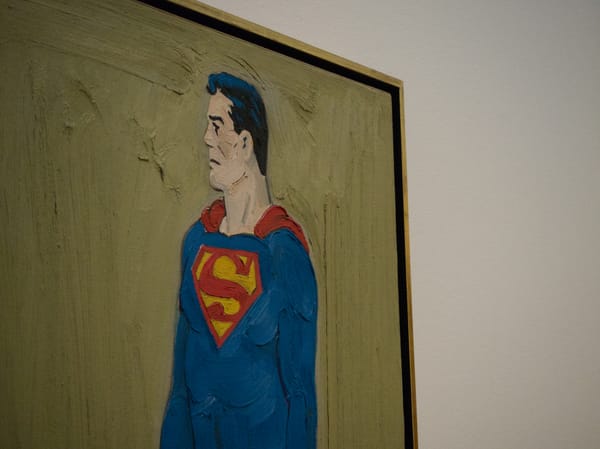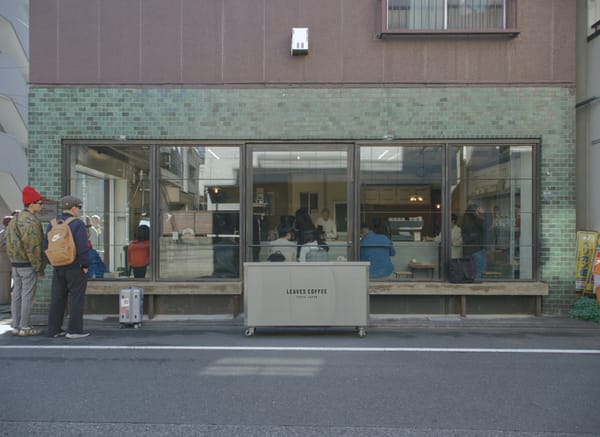
I'm back from my vacation to Japan, slowly adjusting to California time. It was a fun and inspiring trip – I'm thinking about it now while listening to the Eric Dolphy album Out There on vinyl, which I bought after hearing it at the Eigakin jazz kissa during the trip. (I used to play cello, so I appreciate its use in this album instead of a bass.)
I first went to Japan last year for a residency at Almost Perfect, with the goal of exploring shokunin culture – people who devote themselves to a craft. I kept following that thread on this trip, from tempura to coffee to clothing. All these craftspeople seemed to share a certain lightness and flow in their work—something I aspire to.
In the back of my mind, I kept returning to the question of how to make Contraption posts available as a paper newsletter through the mail, something I originally explored in Snail Mail. Throughout the week I ruminated on an elaborate multi-part system for letter delivery. Reader information would live in the Ghost blog account system. I’d build a web app for managing shipping addresses. I would also build a unified single sign-on service, connecting Ghost to this portal and also to future apps.
This multi-app setup seemed elegant – and with AI, it felt possible. I even had a coding agent build most of the login system while I read on the plane home.
Back on my couch today, I realize how much I was overcomplicating the system. I think that's the danger of being away from building too long – I can romanticize systems, but then never find time to implement them. As my obligations to my past self began to mount, I stopped and asked: What would letter delivery look like if it were easy?
Contraption Co. is not my job, so I want my work here to be fun.
Looking at Stripe's free no-code tools, I found a way to hack together something that syncs with my blogging system but also enables shipping address collection and management. Stripe payment links can collect addresses; the customer portal lets people update their info later. Ten minutes of tinkering saved me weeks of work.
Now, the remaining work for letter delivery is straightforward: write a script that detects when a new post is published, look up subscribers in Stripe, and trigger letters through Lob. That logic can live in my "Junk drawer" instead of some fancy new app.
The takeaway here isn’t “don’t think big.” It’s to be comfortable abandoning projects and walking away from them. It’s the same strategy I’ve learned with books: I used to force myself to finish boring ones, and then I’d just stop reading altogether. At some point I realized it’s better to follow my motivation than to cling to sunk costs. When I notice myself procrastinating, it's a sign that my current self isn't bought into the work I had previously committed to.
Even though I won’t use the login system I started on the plane, I did stumble into a new AI coding pattern that I like. Building a login system required low-level knowledge of how Ghost works, plus some awareness of my theme for logos and branding. So I created a new working/ folder on my computer, copied the Ghost source and my blog theme into subfolders, and added a blank login/ folder.
I told the coding agent to write all new code into login/, but to reference the Ghost and theme folders as needed – copying over components, styles, and patterns instead of reinventing them. This worked surprisingly well: it copied styling correctly and could analyze the actual Ghost and theme code, rather than relying on out-of-date documentation.
If you're working on a project that needs to cross-reference multiple repos, I recommend trying this working directory pattern – put all the relevant source code side-by-side with the folder where the agent is generating new code.
So: I’m not using the login system, but I did learn something by tinkering. That’s the balance I want: keep tinkering, but be willing to walk away from projects that begin to feel too heavy.
This ended up being a bit of a meandering Workshop post – but that’s what Workshop is for.
Stay tuned – paper newsletters will (hopefully) be available soon.